All Activity
- Today
-
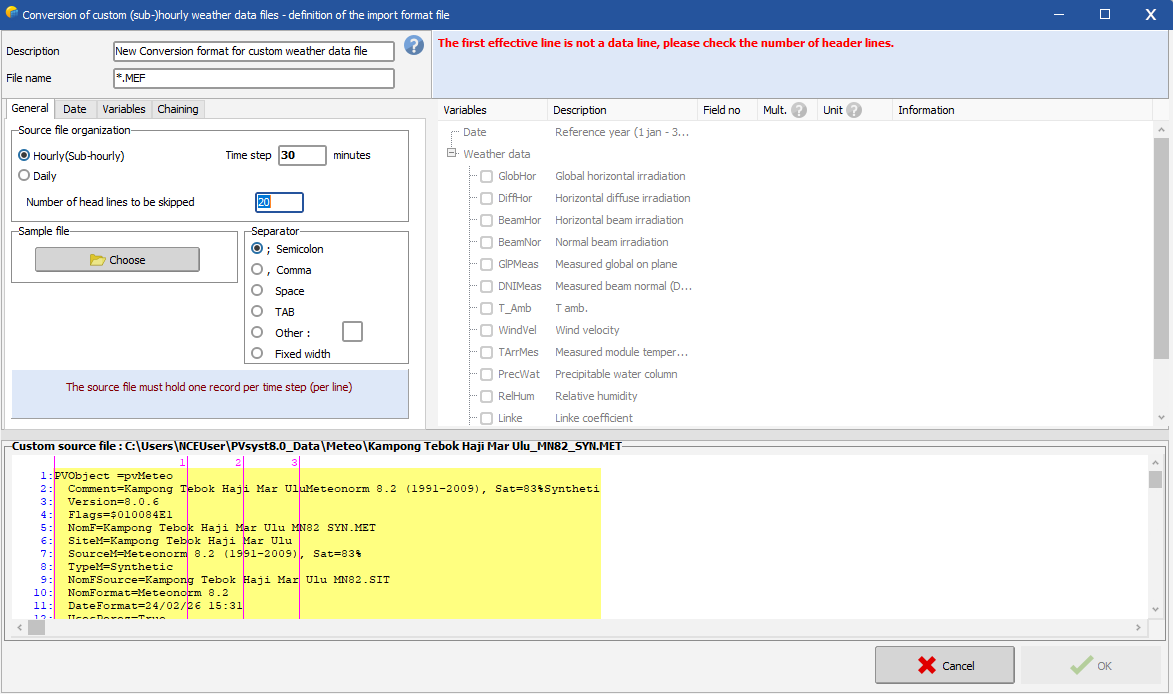
Hello, You should define the number of lines to be skipped, before the line where the (sub)hourly data starts. The general procedure for importing a custom weather data file is described in the following link: https://www.pvsyst.com/help/meteo-database/import-meteo-data/custom-meteo-files/conversion-protocol.html Note that you in this tool are supposed to import a a .csv file with (sub)hourly data, thus one line per time step with irradiance and temperature data and convert the .csv file to a .MET file that you can use in PVsyst to run your simulation. It seems like your source file is already a .MET file with Meteonorm 8.2 (hourly) data. You cannot re-convert an hourly .MET file to include the clipping correction.
-

Albedo shading component calculation
Linda Thoren replied to ClaireWest's topic in Shadings and tracking
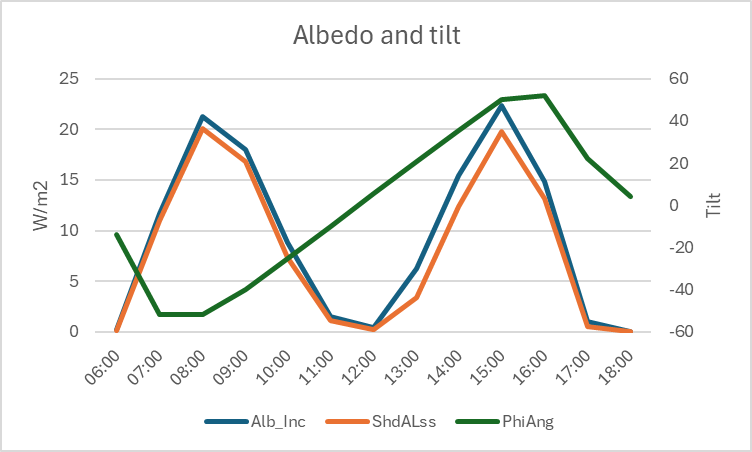
Hi, The shading calculation is indeed explained in the second link you have attached. In general, the higher the tilt, the higher the albedo contribution. Most of the albedo contribution will directly be lost (you see that the albedo loss is indeed following the albedo contribution) since we assume that only the first row is "seeing" the albedo, so that the albedo shading factor will be (n-1)/n (n = number of sheds). The albedo loss is a significant contribution to the global shading losses. -
 surronbuilds33 joined the community
 -
Hi, I am in process of applying the sub-hourly clipping and been following the instruction from INSTRUCTIONS FOR PREPARATION OF PAPERS, but i seem stuck at "the first effective line is not a data line, please check the number of header lines" Which data line should i refer? Do anyone have a video tutorial of enabling the sub-hourly clipping

-
 Haziq joined the community
 -
 Shahrul Aziq joined the community
 - Yesterday
-

Why are diffuse integrals calculated for every run?
dtarin replied to LauraH's topic in Shadings and tracking
It would be helpful to include this in the next update. We've had to use custom tracker approximations to avoid long waits for diffuse recalculations when making other unrelated model updates. -
Hi, how is the albedo shading component (ShdALss) calculated? I have read the help pages on this topic but i am still not clear how this functionally works, sorry. https://www.pvsyst.com/help/project-design/shadings/calculation-and-model/index.html https://www.pvsyst.com/help/project-design/shadings/calculation-and-model/treatment-of-the-albedo-component.html#far-shadings Why does the albedo shading loss have this profile on a clear-sky day (single-axis tracking system): ? TIA
-
 craftsmanstorage joined the community
 - Last week
-
 BENYAMIN joined the community
 -
 Anastasis joined the community
 -
Why is the diffuse shading information computed for every run, unlike the direct shading? Can't this information at least be held in the active memory as long as you're working on the same variant? I'm tweaking my loss terms and every time I rerun, PVsyst takes the time to build the diffuse integrals again. I can understand if you don't want to save it in the export, but while you're working would be nice. Thanks.
-
Consideration of .PAN Parameters in Mixed Module Simulations
Linda Thoren replied to Elise's topic in Simulations
The low light performance and temperature coefficient is defined in the individual .PAN files. The thermal parameters are then set for the full system to evaluate the temperature and the thermal losses in each sub-array. Thus if you are mixing panels in the same inverter (though in different sub-arrays), the different temperature coefficient of the different modules are well taken into account. In the loss diagram you will see the results for the full system. You find more information on the subject in the following PVsyst help pages: https://www.pvsyst.com/help/physical-models-used/pv-module-standard-one-diode-model/index.html?h=pv+module+standard+one+diode+model https://www.pvsyst.com/help/project-design/array-and-system-losses/array-thermal-losses/index.html -
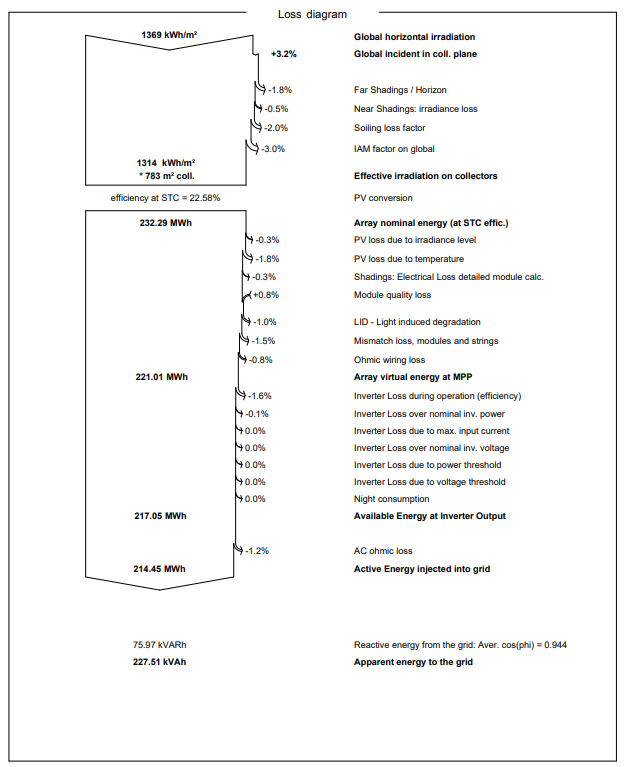
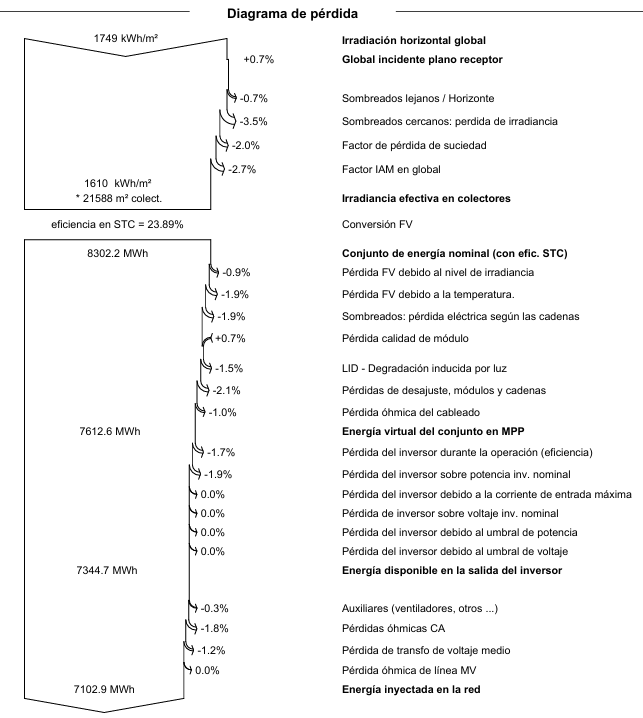
Hello, As you indicate, in PVsyst you will first find the irradiance loss (linear shadings) and then the additional electrical shadings. Note that, in the loss diagram, each loss is defined as percentage of the previous energy quantity. Therefore the percent values are not additive.
-

Multi-Year Analysis of Inverter Clipping Losses & Module Degradation
ASZulu replied to ASZulu's topic in Simulations
Hi all, Thank you so much for the prompt and helpful responses! After reading the PVsyst documentation and your feedback, I understand and am happy with the output. -
 mohsin sanaullah joined the community
 -
Multi-Year Analysis of Inverter Clipping Losses & Module Degradation
Linda Thoren replied to ASZulu's topic in Simulations
Hello, With lower PV production due to ageing modules, it seems reasonable to see less overload losses. -
Multi-Year Analysis of Inverter Clipping Losses & Module Degradation
dtarin replied to ASZulu's topic in Simulations
It is expected for plant/inverter clipping to decrease as system capacity degrades. -
Multi-Year Analysis of Inverter Clipping Losses & Module Degradation
ASZulu replied to ASZulu's topic in Simulations
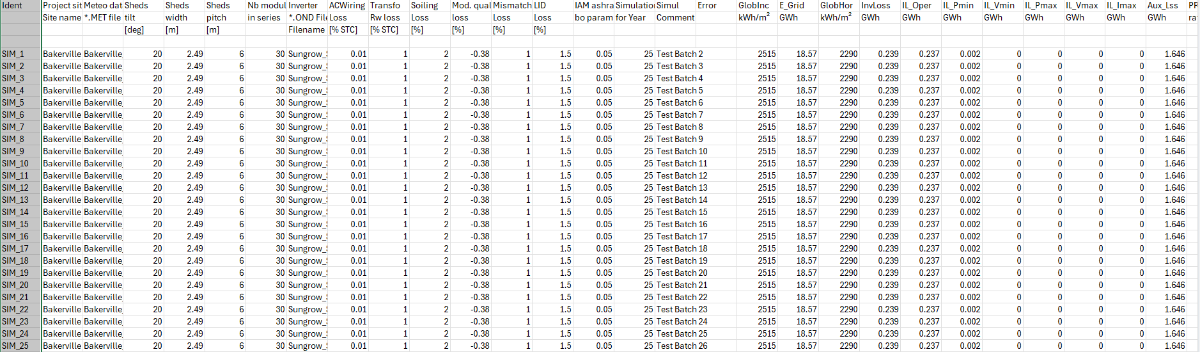
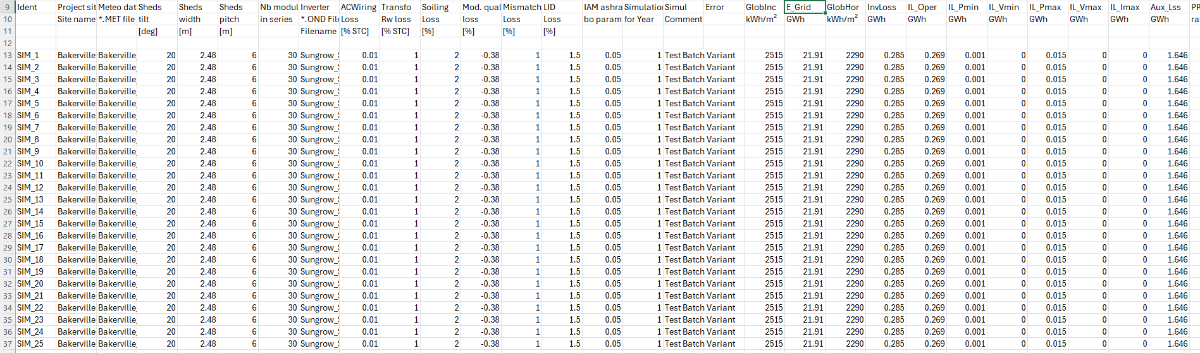
Hi Linda, Thank you. After ensuring that the "Simulation for Year" is from 1 to 25, I get results as per the below attachment. This now shows reduction in production, but somehow inverter losses (columns starting with "IL_") also decrease with each year, which is not what we had expected. Could I have missed something? Many thanks!
-
Multi-Year Analysis of Inverter Clipping Losses & Module Degradation
Linda Thoren replied to ASZulu's topic in Simulations
You define the year in the batch parameter csv file. As in the video tutorial un minute 7. Now indeed it seems like you are not varying any of the parameters and simulate the same project 25 times. -
Multi-Year Analysis of Inverter Clipping Losses & Module Degradation
ASZulu replied to ASZulu's topic in Simulations
Hi Linda, Yes. Even when I change the Year No. to "25" in the "Aging" section within the "Detailed Losses", it seems to produce results related to that specific year as many times as there are rows. How do I ensure that each row is for each year, and not one year repeated across multiple rows (as attached)? Your assistance is really appreciated.
-
Multi-Year Analysis of Inverter Clipping Losses & Module Degradation
Linda Thoren replied to ASZulu's topic in Simulations
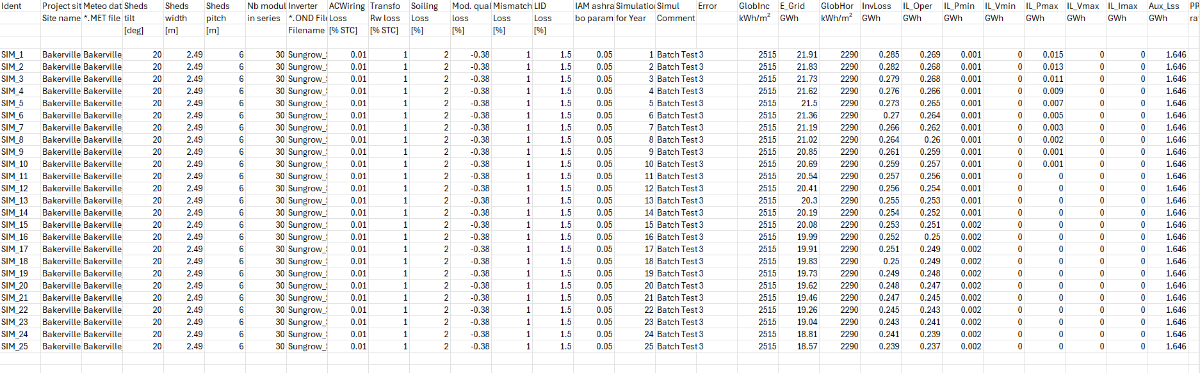
Hi, It seams like you have set all the simulations for year 1. In the 15th column "Simulation Year" -
Multi-Year Analysis of Inverter Clipping Losses & Module Degradation
ASZulu replied to ASZulu's topic in Simulations
Hi, Linda. When following the steps in the second video, I cannot seem to find the approach to simulating data for 25 separate, consecutive years. My resulting batch CSV shows the exact same outputs for all inputs, as per the attachment below: Please may you advise on where I went wrong or how I can edit inputs to show independent losses and resulting parameters to show the inverter behaviour over a 25-year period. Thanks again.
-
Multi-Year Analysis of Inverter Clipping Losses & Module Degradation
ASZulu replied to ASZulu's topic in Simulations
Thank you for this feedback, Linda. -
Multi-Year Analysis of Inverter Clipping Losses & Module Degradation
Linda Thoren replied to ASZulu's topic in Simulations
Hi, You find information of how to define the ageing in the following tutorial: The Batch mode is described in the following tutorial: -
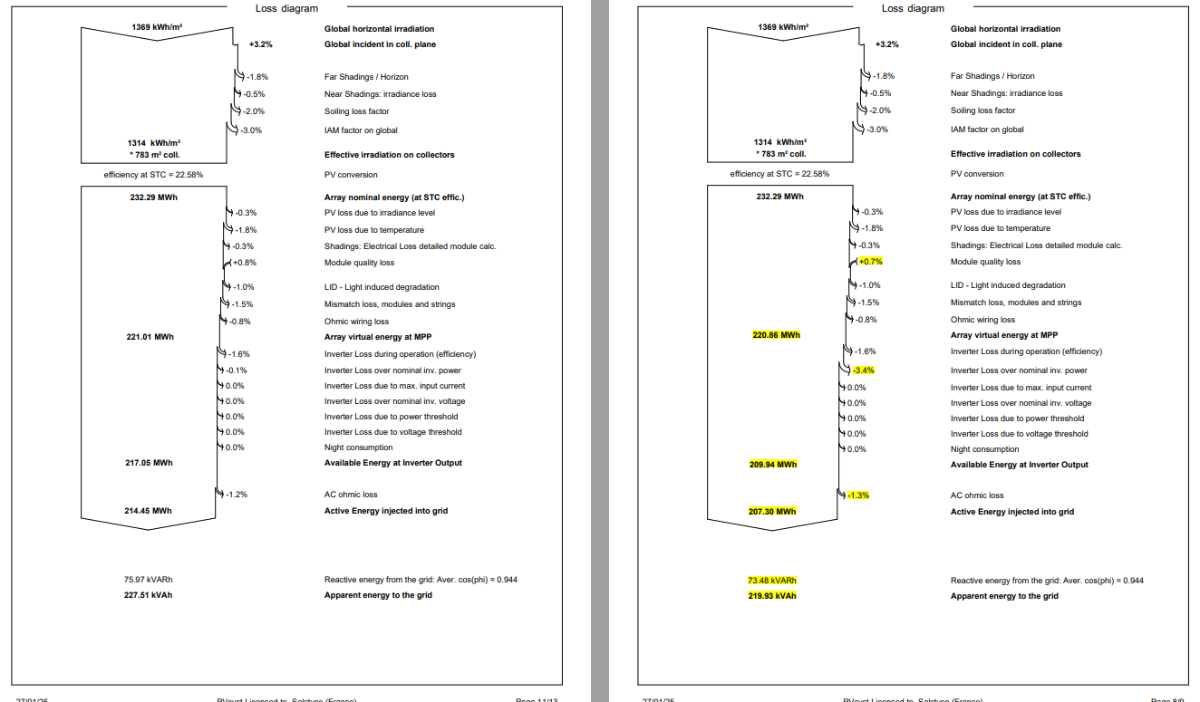
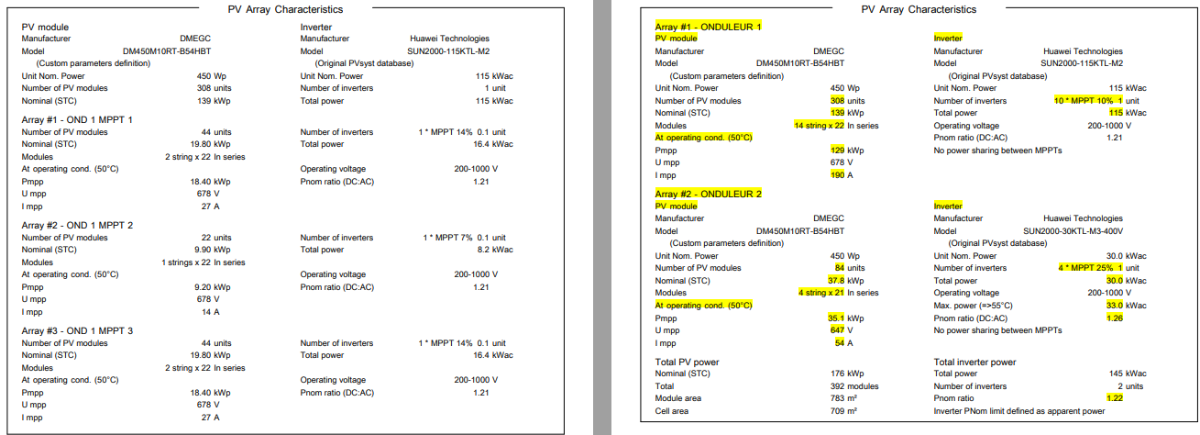
Hello, When using the independent MPPT inputs feature, it is very important to have a multiple between the number of strings and MPPTs in each sub-array, or PVsyst can not equally distribute the strings over the MPPTs and you risk incorrect evaluation of the inverter losses over nominal inverter power. The MPPT and Power sharing feature is fully described in the following youtube tutorial:
-
Hello, I noticed something in the software regarding inverter loss over nominal inv. power : The creation of a subfield for each MPPT in the system or t he grouping of multiple MPPTs into the same subfield leads to significant simulation differences (see the example below with an additional 3% in losses). How PVSYST manages the repartition of strings when we don't create a subfield for each MPPT ? Is there a trick to avoid creating a subfield for each MPPT (to save time) without generating these losses? Thanks you for your help
-
A client has requested that we conduct an assessment of string inverters versus central inverters on PVsyst by analysing the inverter losses on an annual basis for a 25-year lifecycle. In addition to the typical losses displayed in the simulation report, they would like to see the annual clipping losses as well as the nett yield as a result of these losses by means of a 1 - 25 year generation table (I have read that this is done via PVsyst's Batch Mode capability, but needed guidance on the approach). Please may you assist by providing assistance on how to approach this client request on the PVsyst platform for both scenarios. Many thanks!
-
 luca bartoli joined the community
 -
 Bieng joined the community
 -
In the case that different PV modules (and unique .PAN files) are defined in Subarray 1 and Subarray 2, how does PVsyst consider the different temperature coefficients and low light performance of each module in the simulation? I can see one aggregated number in the results, but I am wondering how the calculation is performed and if the unique module / .PAN characteristics are both considered. Does the answer change if the mixed modules share an inverter?
-
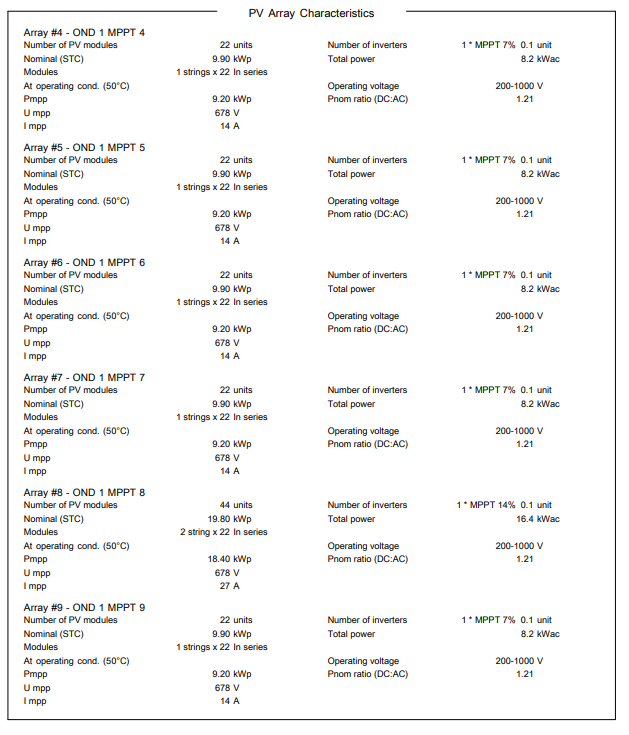
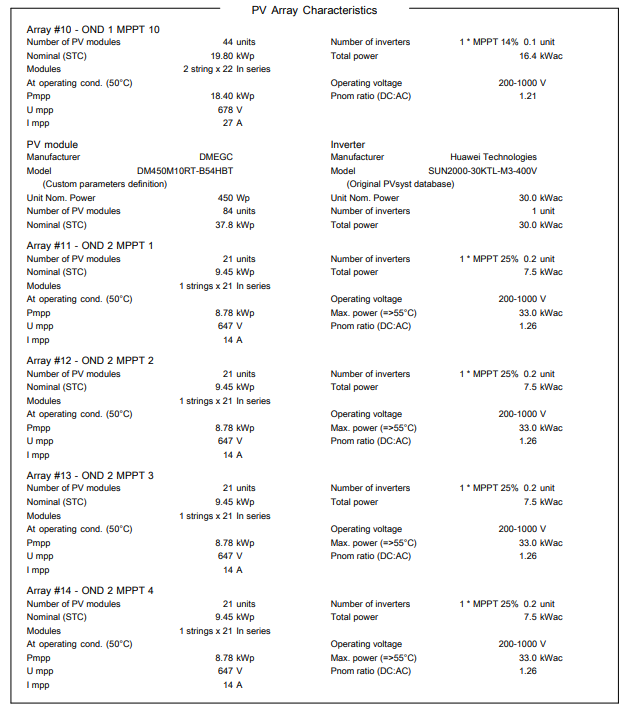
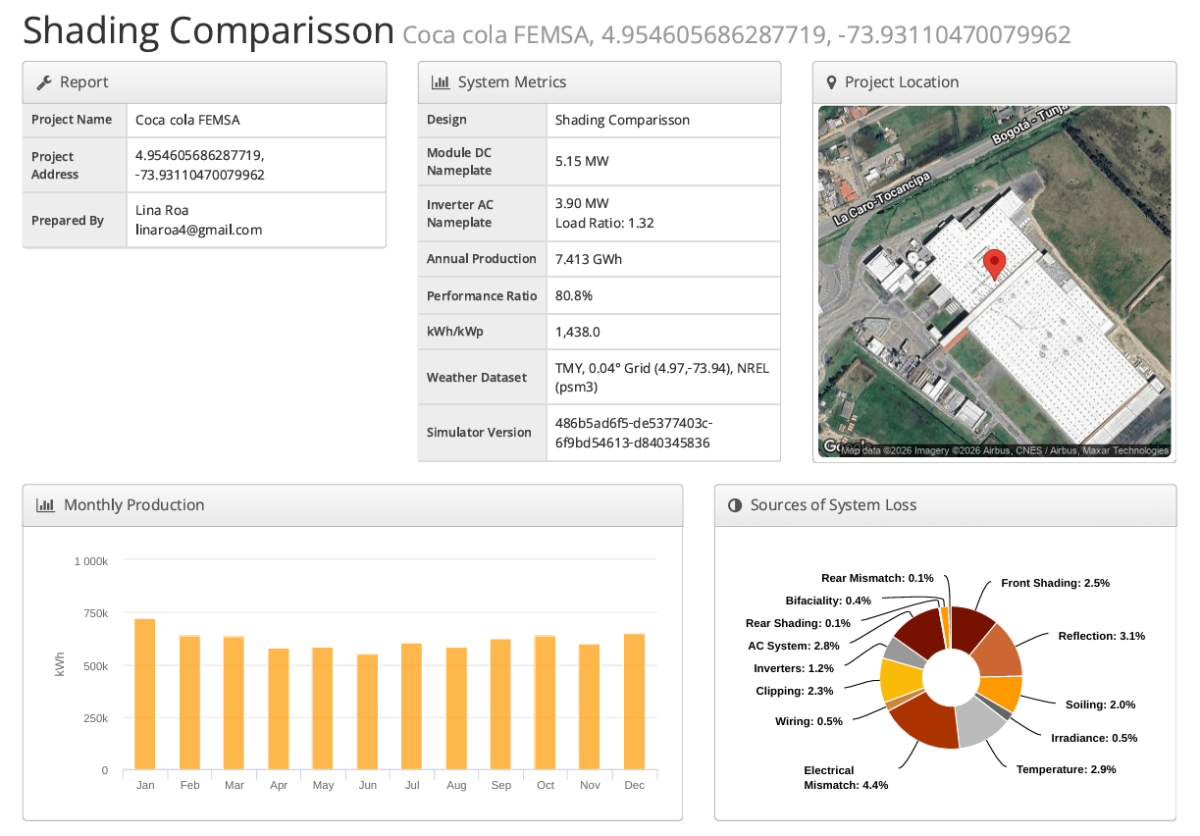
 Hi all, We are currently performing a technical comparison between PVsyst and HelioScope for a C&I rooftop project (FEMSA Coca-Cola case), and we observed that shading losses reported in HelioScope appear lower than those obtained in PVsyst. In PVsyst, we are considering: Near shading irradiance losses (~3.5%) Additional electrical mismatch losses due to shading (~1.9%) This leads to a relevant question from a modeling standpoint: In HelioScope, are shading losses reported as: Pure irradiance (geometrical) losses only?FEMSA_ Coca-cola_ Tocancipá_Project.VC1-Report.pdfFEMSA_ Coca-cola_ Tocancipá_Project.VC1-Report.pdfFEMSA_ Coca-cola_ Tocancipá_Project.VC1-Report.pdf Or do they already include the electrical mismatch effects caused by partial shading? From a methodological perspective, we are trying to understand whether including: Irradiance shading losses, and Additional electrical mismatch losses could potentially lead to double counting in PVSyst, depending on how each software handles the shading model internally. PVSyst results: Helioscope results: We would appreciate clarification from anyone who has experience reconciling results between the two platforms. Best regards, Angel Duarte
- Earlier
-
You are correct, DTArrGl is weighted using GlobEff but it is computed as follows: DTArrGl = (T_Array - T_Amb) / GlobEff Note that it is only calculated for GlobEff > 7W/m2 and set to 0 otherwise as it becomes insignificant for very low irradiances.
-
Hello, I have a question about the DTArrGl parameter. On the help page it says it is DTArr weighted by the "effective" global irradiation which I have assumed to be GlobEff. I'm having trouble understanding how this is calculated though. To my understanding, being weighted by something means that GlobEff should be multiplied by DTArr but this doesn't appear to be the case. Any support would be helpful