

kapetav
-
Posts
3 -
Joined
-
Last visited
Everything posted by kapetav
-
PVSyst vs pvlib tracking angle comparison
kapetav replied to kapetav's topic in Shadings and tracking
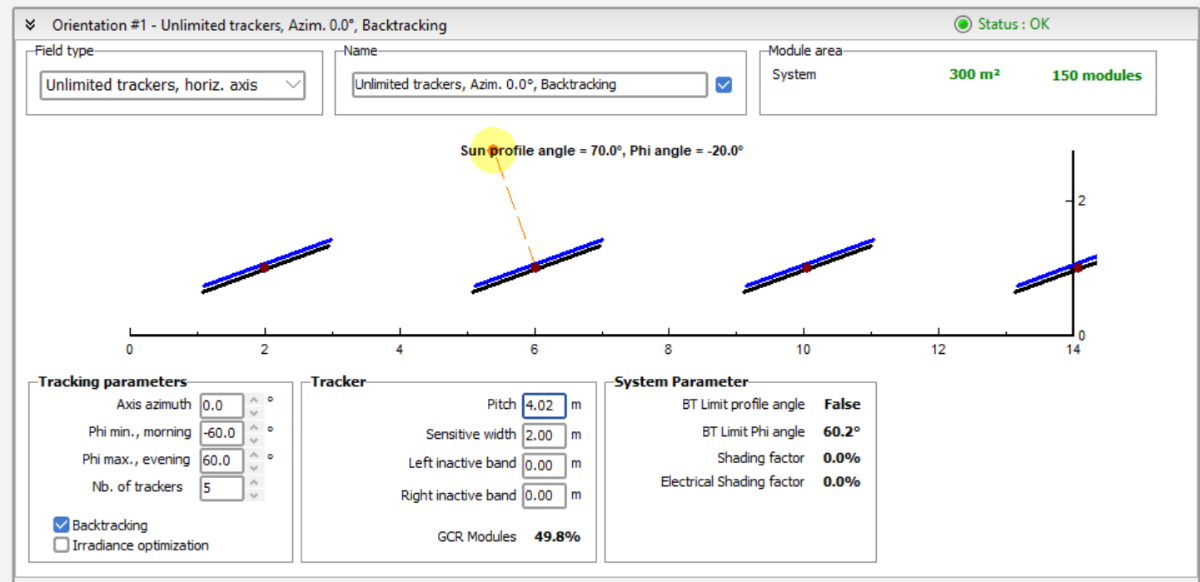
It seems I get the same result whether I add 2cm to the pitch or subtract 1cm from the sensitive width:
-
PVSyst vs pvlib tracking angle comparison
kapetav replied to kapetav's topic in Shadings and tracking
Hi Michele, thanks this helps! To confirm, how would I best account for this added width? By increasing the backtracking pitch like below by 2cm?
-
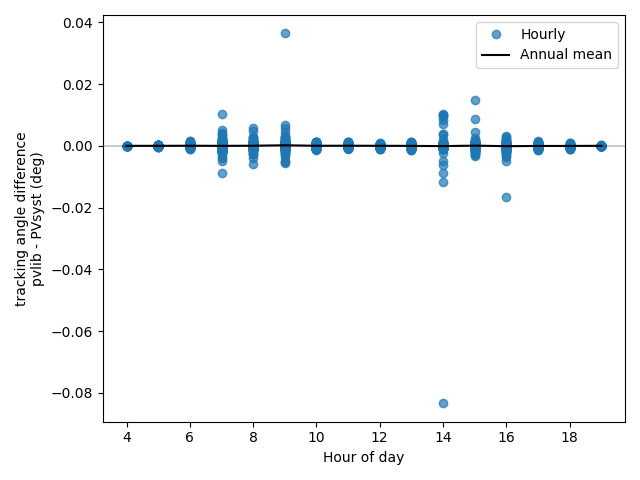
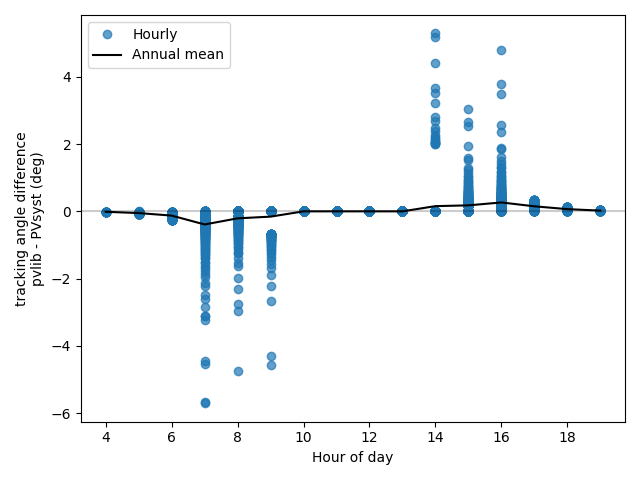
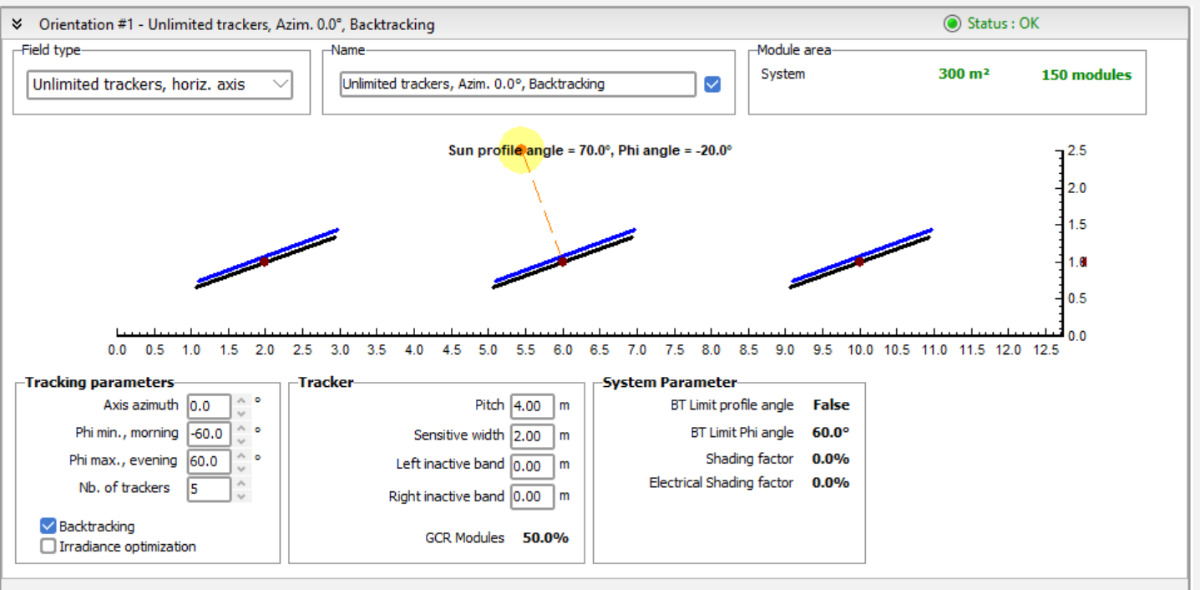
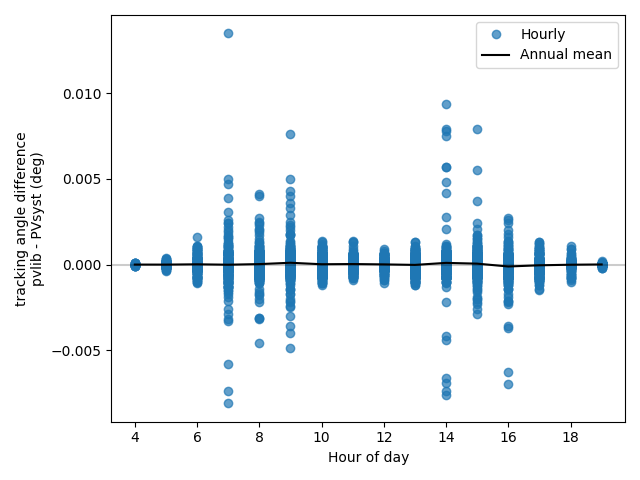
Hello, I'm comparing the tracking angles from a simple PVSyst simulation with the tracking angles given by pvlib.tracking.singleaxis(), and I expect a very similar result between them. I do get a near-perfect match during the middle of the day, however I see the angles deviate significantly during backtracking times. The angles match only when I slightly modify the GCR in the pvlib function (from 50% to 50.25%), which suggests to me that the backtracking GCR in PVSyst may not be what I set myself (50%). Am I setting up the PVSyst simulation properly to compare with the pvlib function? I understand that there are "hidden parameters", but I haven't found one that changes the backtracking angles. My PVSyst setup is as follows: - 5 single-axis trackers defined on flat ground, 150 modules total, 1P orientation - module length: 2000mm, module width: 1000mm - unlimited trackers, pitch: 4m, GCR: 50% My pvlib inputs are: pvlib_tracking = tracking.singleaxis( apparent_zenith=90 - df["HSol"], apparent_azimuth=df["AzSol"] + 180, axis_tilt=0, axis_azimuth=180, cross_axis_tilt=0, max_angle=60, backtrack=True, gcr=0.5, ) I compare pvlib's "tracker_theta" output with PVSyst's "PhiAng" output. The plot below shows the yearly differences (up to 5-6 degrees during backtracking times): When I change the pvlib GCR to 0.5025 (corresponds to a ~0.02m difference in the pitch), the discrepancy goes away: To better match the pvlib function at GCR=50% I tried setting PVSyst hidden parameters such as "Shed field default frame margin" to zero, but I didn't see a change in the resulting angles.