Hi all,
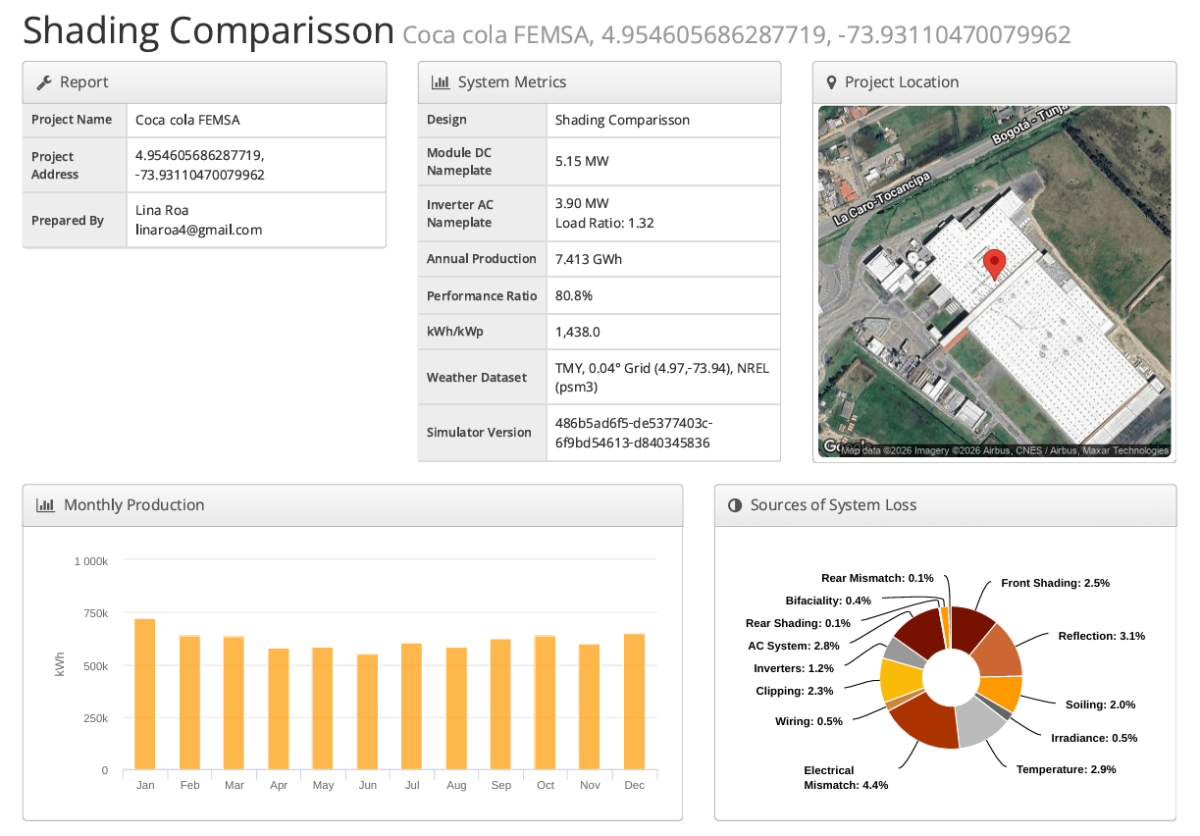
We are currently performing a technical comparison between PVsyst and HelioScope for a C&I rooftop project (FEMSA Coca-Cola case), and we observed that shading losses reported in HelioScope appear lower than those obtained in PVsyst.
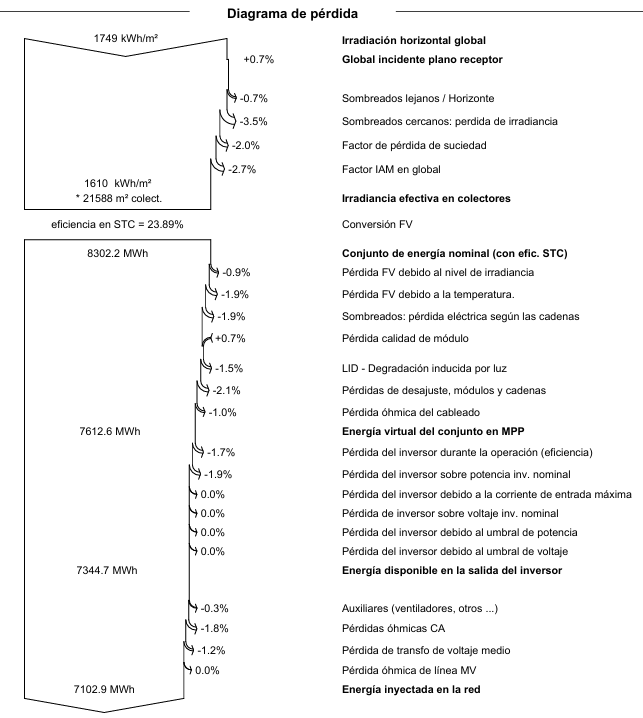
In PVsyst, we are considering:
Near shading irradiance losses (~3.5%)
Additional electrical mismatch losses due to shading (~1.9%)
This leads to a relevant question from a modeling standpoint:
In HelioScope, are shading losses reported as:
Pure irradiance (geometrical) losses only?FEMSA_ Coca-cola_ Tocancipá_Project.VC1-Report.pdfFEMSA_ Coca-cola_ Tocancipá_Project.VC1-Report.pdfFEMSA_ Coca-cola_ Tocancipá_Project.VC1-Report.pdf
Or do they already include the electrical mismatch effects caused by partial shading?
From a methodological perspective, we are trying to understand whether including:
Irradiance shading losses, and
Additional electrical mismatch losses
could potentially lead to double counting in PVSyst, depending on how each software handles the shading model internally.
PVSyst results:
Helioscope results:
We would appreciate clarification from anyone who has experience reconciling results between the two platforms.
Best regards,
Angel Duarte